%20(1920%20x%201080%20px)%20(1).avif)
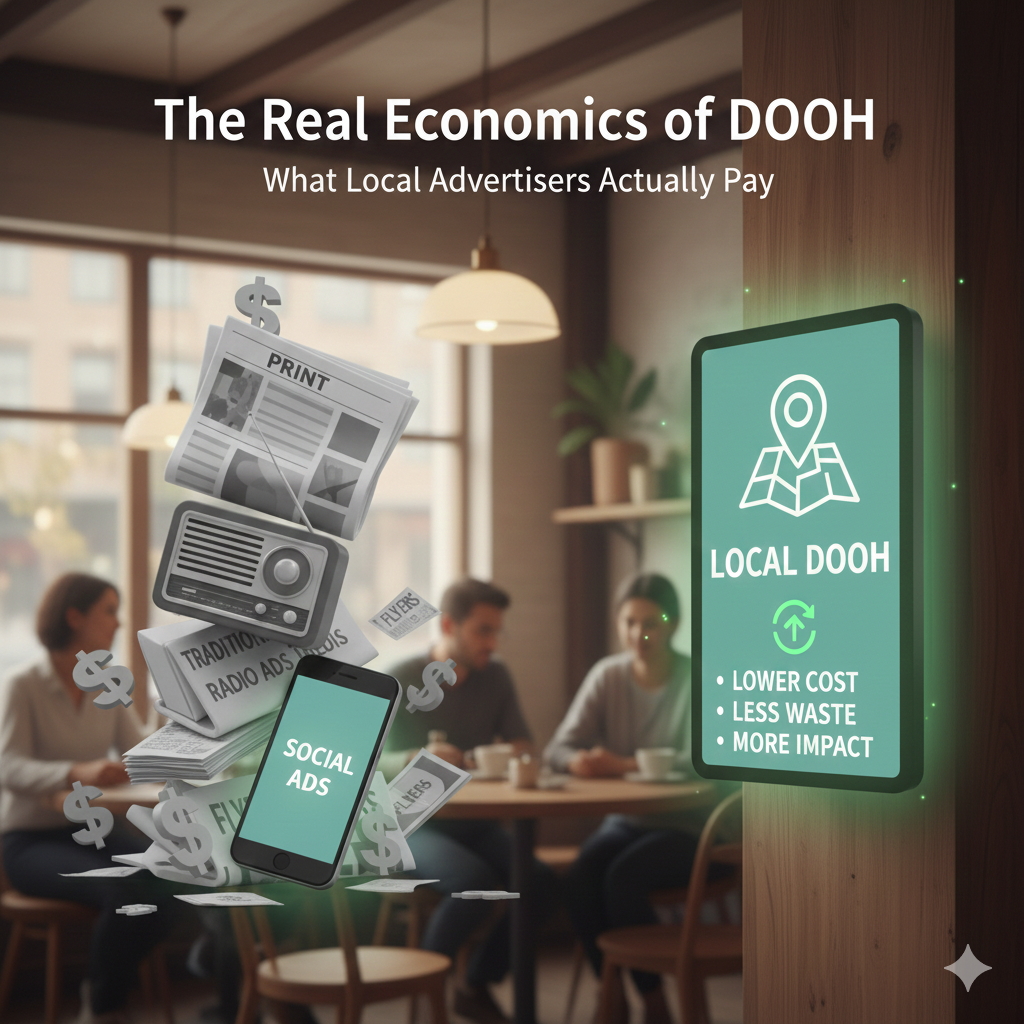
Many small business owners hear the term DOOH (stands for Digital Out Of Home) advertising and assume it is expensive. They picture giant digital billboards on highways or screens in airports. They think only big brands can afford it. The truth is very different. Hyperlocal DOOH is one of the most cost friendly ways for a local business to get real visibility.
To understand why, we need to look at what advertisers actually pay. When you compare DOOH to traditional media, the value becomes clear. The cost is lower. The waste is smaller. The impact is stronger.
This is the real economics of DOOH.
Why DOOH Looks Expensive From The Outside
Digital screens feel high tech. They glow. They move. They stand out. Because of this, many owners assume they come with high price tags. That idea comes from highway billboards and national programmatic networks. Those systems are built for giant campaigns. They charge thousands of dollars for a single run.
Hyperlocal DOOH is not built that way. It focuses on one community at a time. A single venue. A tight group of people. That is why the cost drops so much.
Once a screen is installed, it can show many ads each day. There is no printing. No delivery. No setup each time. The cost to operate it stays low. That means the price for local advertisers stays low too.
The Simple Pricing Structure Behind Local DOOH
Traditional media uses complicated models. Radio charges for thirty second spots. Newspapers charge for squares of printed space. Programmatic DOOH charges for impressions that shift with bidding. Each model is confusing and hard to predict.
Hyperlocal DOOH takes a different path. Pricing is simple. A brand pays for a static slot or a video slot in the loop. That is it. One clear number. One clear plan.
Most local networks charge between fifty dollars and two hundred dollars per month for a static image. Video slots cost more because motion grabs more attention. But even then, the price is far lower than what most business owners expect.
This is where the real value shows. For the cost of one lunch a week, a business gets constant exposure to real people in the same city.
Comparing DOOH to Older Media
A small business today still looks at older media when deciding how to promote itself. They look at print, radio and even mail flyers. When you compare the cost of each one, DOOH wins on price.
A small print ad in a local paper can cost hundreds of dollars for just one day. Radio campaigns cost thousands for a short run that ends the moment the slot is over. Flyers can cost one thousand dollars or more once you add design, printing and delivery.
Then the message disappears. There is no rerun unless you pay again.
DOOH works differently. Your message plays many times each day. It plays every week. It stays in front of people while they go through their normal routines. The cost per view becomes extremely low. This is the opposite of traditional media, where you pay a lot for a short burst that people forget within hours.
Why DOOH Beats Social Ads On Value
Social ads look cheap at first. Many small businesses start there because the entry price is low. But over time, social ads become more costly because you must keep paying to stay visible. The feed moves fast. Competition grows. The cost per click rises. And many views are not from people in your area.
DOOH reaches real people in a physical space. They stay longer. They look up. They take in the message. You do not pay extra for every impression. You do not get charged more when the platform gets busy. Your cost stays the same each month.
That puts DOOH in a better spot for cost control and long term value.
Local Reach Without Wasted Spend
Programmatic DOOH can get expensive fast. You pay for impressions across many screens. Some people who see it may live far away. They may never visit your business. Small owners do not want to waste budget on people who cannot become customers.
Hyperlocal DOOH avoids this problem. You choose the venue. You choose the neighbourhood. Your message only plays where it matters.
If you run a clinic in Langley, your ad runs in Langley. If you run a gym or spa, your ad appears in the same area where your customers live. No wasted reach. No wasted dollars.
This makes the cost per real potential customer very low.
What Local Advertisers Really Pay
When you look across local DOOH networks, most small businesses pay between one hundred and three hundred dollars a month. Some invest more for video or multiple venues. But even the higher tiers are still small compared to traditional marketing channels.
For many owners, this becomes the best value in their marketing stack. They get steady visibility. They get placement in trusted venues. They pay a simple price with no surprises.
The Bottom Line
The economics of DOOH are far more friendly than most people think. Local advertisers do not pay the massive fees seen in national campaigns. They pay small monthly rates that fit their budget and deliver real visibility where it counts.
When you stack DOOH against print, radio, flyers or paid social, the math becomes clear. DOOH gives more exposure for less money with far less waste. It is the type of steady awareness that small businesses need to grow inside their community.
For any owner who wants reliable visibility without breaking their budget, hyperlocal DOOH is one of the smartest choices they can make.
.avif)
.avif)

